

Table of Contents
Proper training of a puppy is vital in the establishment of discipline, confidence and a good emotional relationship between the pet and the owner. Early intervention prevents behavioral issues such as biting, aggression, fear, anxiety or destructive behaviors.
By using professional help provided by Vet Care Plus, pet owners will be sure that their puppy will be taught obedience, social skills, and good habits that will serve them throughout their life. Today, a lot of pet owners look to find good dog boarding in Noida so that they can make sure their puppy has the proper first steps with professional help.
Why Early Puppy Training is Important for Behavior Development
Early training is an important aspect of forming the personality of your puppy and making them more adaptable to their home surroundings. Professional dog training techniques are structured learning, positive reinforcement and behavioral correction techniques that are used to teach the puppies to learn faster.
Benefits of early puppy training
- Develops discipline at a young age: Training at an early age makes the puppies learn the rules of the household and lessens the confusion concerning the behavior that is acceptable within a domestic setting.
- Eliminates behavioral difficulties: Early training can be used to control biting, chewing furniture, jumping on guests, and a high level of barking before they are developed.
- Develops better communication: Verbal instructions and body language are well comprehended through structured learning in puppies.
- Grows self-confidence when in new circumstances: Puppies that are trained early are self-confident in new situations and environments.
- Develops routine habitual patterns: Puppies will learn to follow feeding routines, sleeping routines and toilet routines in a short time through regular training.
Vet Care Plus professional trainers adopt organized positive approaches to help in healthy behavioral development.
How to Train a Puppy the Right Way Using Positive Reinforcement
Formal training by use of pet training methods makes the puppies know what is expected without instilling fear. Positive reinforcement promotes learning by use of rewards as opposed to punishment.
Positive training techniques
- Reward right behavior right away: Rewards such as treats, praise or toys will make puppies learn to correlate correct behavior with positive things.
- Training sessions should be short and interactive: Short training is better to keep the puppies focused and avoid boredom and distraction.
- Always use the same command words: Repeating instructions makes the puppies learn quicker.
- Keep a natural voice and body language: Soft communication creates confidence and increases the learning potential.
- Use no punishment-based methods: The fear-based training methods may lead to the development of anxiety and low confidence.
Stability and perseverance enhance learning rate and behavioral consistency.
First 5 Commands Every Puppy Should Learn for Obedience
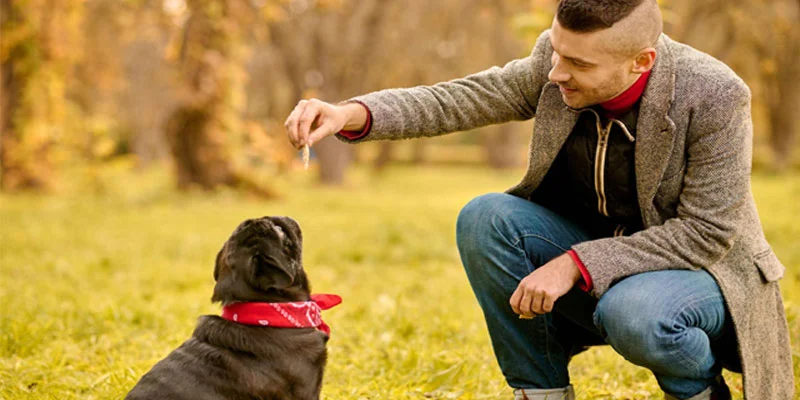
Most pet owners believe in taking their puppies to formal dog training lessons so that the fundamentals of training can be instilled right from the start.
Essential beginner commands for puppies.
- Sit command enhances control of behavior: Aids in the management of excitement and promotes peaceful behavior when feeding or welcoming visitors.
- Stay command enhances patience: It avoids the situation of puppies rushing to dangerous places such as roads or busy places.
- Come command enhances recall response: Ensures the pet owners are able to recall the puppies within a short period when they are out walking.
- Down command enhances relaxation: Promotes relaxed behavior in the social or indoor setting.
- Leave it command: Removes destructive chewing: Stops puppies from picking potentially dangerous things such as wires, plastic, or poisonous things.
Simple instructions are used to establish discipline and enhance everyday behavior.
Understanding the 3-3-3 Rule for Puppy Adjustment
When their puppy takes time to settle down in the new environment, pet parents resort to online searches to get guidance or a “pet trainer near me” in the locality. There is a 3-3-3 rule that describes the process of how puppies adjust emotionally to a new house.
3 stages of puppy adjustment
- The initial 3 days are devoted to emotional comfort: Puppies can be nervous or shy because of being in new environments.
- Weeks 1-3 involve usual learning: Puppies start to realize the feeding schedule, the place to sleep, and day-to-day activities.
- The first 3 months will be devoted to trust building: Puppies become emotionally attached and confident with the members of the family.
Learning stages of adjustment would enable pet parents to be patient.
Understanding the 7-7-7 Rule for Social Confidence Development
Professionals in pet training centers usually recommend structured exposure as a way of enhancing social behavior in puppies.
Social development activities
- Meet 7 new people to alleviate fear: Fear of being alone in a social situation is alleviated through exposure.
- Explore 7 places to develop flexibility: Exploring parks, streets, and homes enhances confidence.
- Practice 7 train to learn better: Variety makes learning more stimulating.
- Be exposed to normal sounds at home: Exposure inhibits the development of fear responses in the future.
- Play with pets that are safe as a social balance: Controlled interaction enhances behavior.
Balanced exposure improves emotional stability.
Understanding the 10-10-10 Rule for Daily Routine
A lot of professional trainers in a dog training facility suggest a daily routine to achieve improved learning.
Structured daily learning routine
- 10 minutes of obedience training enhances command learning: Brief training enables puppies to concentrate and memorize.
- A 10-minute exercise will free up additional energy: Exercise will stop the destructive behavior brought about by boredom.
- Bonding: 10 minutes of bonding enhances trust: Play enhances the emotional bond between the pet and the owner.
- Short training sessions enhance memory retention: Puppies retain better when they are trained regularly.
- Routine activities decrease stress: A stable schedule enhances emotional stability.
Routine improves discipline and confidence.
How to Stop Puppy Bad Behavior Using Gentle Correction

Skilled dog trainers apply the behavior redirection method of correcting bad habits without instilling fear.
Behavior correction techniques
- Move redirecting chewing behavior to safe toys: Helps puppies learn which objects to play with.
- Disregard attention-seeking barking behavior: Prevents strengthening of bad habits.
- Praise behavior when calm: Good behavior patterns are reinforced through Positive reinforcement.
- Shouting to minimize anxiety: Loud responses get the puppies confused and decrease trust.
- Apply the same rules in the house: It is best to keep the same rules so that the puppies can see what is acceptable behavior.
Professional trainers assist in the detection of triggers and give specific solutions.
Common Puppy Training Mistakes to Avoid
Dog training services by professional trainers tend to point out the most frequent errors that reduce the pace of learning.
Training mistakes to avoid
- Disjointed instructions are confusing: Varied instructions retard the learning process.
- Accident punishment induces fear: Fear decreases confidence and learning capacity.
- Socialization deficiency leads to anxiety: Puppies can learn to be scared of people or their surroundings.
- One is likely to get frustrated by the lack of results in the short run: Behavior training is a matter of patience.
- Long sessions have less interest in learning: Puppies have more response to short sessions.
Guided training improves learning success.
How to Teach a Puppy Yes and No Clearly
Dog training service programs are structured around the teaching of simple communication words that can be easily grasped by the puppies.
Teaching yes and no commands
- Use yes to reinforce positive behavior: Strengthens the performance of good bbehaviors
- Use not placidly to prevent undesired behavior: Prevents fear and corrects mistakes.
- Redirect behavior upon saying no: Helps puppies learn the right alternative behavior.
- Correct response should be rewarded to enhance learning rate: Positive reinforcement enhances comprehension.
- Practice constantly to be consistent: Habit makes good communication.
Clear communication improves obedience.
Puppy Training Based on Breed - Breed Wise Behavior Learning Approach
Breed temperament influences the speed with which the puppies pick up the commands and accommodates routines. Many professional trainers will tailor pet training programs based on breed personality.
Breed-wise puppy training guidance
- Labrador training is energy management: A large degree of activity necessitates exercise and obedience building.
- German Shepherd training is all about discipline: An intelligent breed enjoys the advantage of organized training in leadership.
- Golden Retriever training is socially oriented: Early exposure training is advantageous to a friendly temperament.
- Pug training is about patience: Stubborn learning style is favorable in brief, consistent lessons.
- Beagle training is based on distraction control: The strong scent instinct is to be trained on recall.
- Rottweiler training focuses on early discipline: Protective instinct benefits from structured obedience training.
- Shih Tzu training focuses on routine consistency: A fixed schedule improves toilet training.
- Indie breed training is an emphasis on flexibility: Social exposure is a benefit of natural intelligence.
- Husky training is aimed at releasing energy: High stamina needs organized physical activity.
- Dachshund training is repetitive: Practising Independent behaviour enhances it.
Breed-specific guidance improves training efficiency.
Breed Wise Training Difficulty Level Table
Dog Breed | Training Difficulty | Behaviour Trait | Training Focus | Time Required |
Labrador Retriever | Easy | Friendly and energetic | Obedience and energy control | 4–6 weeks |
Golden Retriever | Easy | Social and intelligent | Socialization and recall | 4–6 weeks |
German Shepherd | Medium | Protective and intelligent | Structured discipline | 6–8 weeks |
Pug | Medium | Stubborn but friendly | Consistent repetition | 6–8 weeks |
Beagle | Medium | Curious and distracted | Recall training | 6–8 weeks |
Shih Tzu | Medium | Calm but independent | Routine-based learning | 6–7 weeks |
Indie Breed | Easy | Adaptable and alert | Social exposure | 4–6 weeks |
Rottweiler | Medium-Hard | Protective instinct | Obedience training | 8–10 weeks |
Husky | Hard | Highly energetic | Recall and exercise | 8–12 weeks |
Dachshund | Medium | Independent | Repetition training | 6–8 weeks |
Puppy Training Schedule Chart
Time | Activity | Purpose |
7 AM | Potty break | Builds toilet discipline |
7:30 AM | Feeding | Creates a daily routine |
8 AM | Basic command training | Improves obedience |
9 AM | Rest | Supports development |
11 AM | Playtime | Reduces boredom behaviour |
1 PM | Potty break | Reinforces toilet habit |
2 PM | Social interaction | Builds confidence |
5 PM | Walk and recall training | Improves listening |
7 PM | Feeding | Maintains schedule |
8 PM | Calm bonding | Strengthens emotional bond |
10 PM | Final potty break | Prevents night accidents |
Routine improves discipline and emotional stability.
Behavior Problem vs Breed Guide
Behaviour Issue | Common Breed | Cause | Training Focus |
Excessive chewing | Labrador, Husky | Teething and energy | Chew toys and exercise |
Excess barking | German Shepherd | Protective instinct | Social exposure |
Stubborn behaviour | Pug, Dachshund | Independent nature | Repetition training |
Separation anxiety | Golden Retriever | Emotional bonding | Gradual independence |
Aggression | Rottweiler | Guarding instinct | Early socialization |
Pulling leash | Husky | High energy | Recall training |
Fear of strangers | Shih Tzu | Limited exposure | Social training |
Jumping on people | Labrador | Excitement | Calm greeting training |
Digging habit | Dachshund | Natural instinct | Physical activity |
Why Choose Vet Care Plus for Puppy Training

Vet Care Plus provides structured programs designed to improve obedience, discipline, and emotional stability.
Benefits of choosing Vet Care Plus
- Experienced professionals ensure safe and effective training methods.
- Customized training plans based on breed behavior.
- Guidance for anxiety, aggression, and social behavior improvement.
- Structured obedience programs improve discipline.
- Support for first-time pet parents improves confidence.
Professional training ensures long-term behavioral success.
Book Personalized Puppy Training / Training Center for Dogs in Noida
Structured puppy training helps develop obedience, confidence, and emotional stability. Vet Care Plus provides personalized guidance to help puppies learn positive habits and improve behavior through scientifically structured programs.
FAQs About Puppy Dog Training Classes
A structured exposure method that improves social confidence through interaction with people, environments, and activities.
A routine of 10 minutes of training, 10 minutes of exercise, and 10 minutes of bonding daily.
It explains the stages of emotional adjustment in the first 3 days, 3 weeks, and 3 months.
Aggression, extreme fear, excessive biting, or inability to calm down may indicate behavioral concerns.
Daily 5–15-minute sessions help reinforce learning effectively.
Basic obedience usually takes 4–6 weeks with consistent practice.