
Table of Contents
Pet owners experience natural anxiety when their pets require Pet Surgery. The complete process needs to be understood because it establishes your capacity to remain composed while making decisions.
Understanding Why Your Pet May Need Surgery

Pets require medical procedures which serve multiple purposes including preventive measures and emergency medical treatment and corrective medical procedures. Planned surgeries include spaying and neutering and dental procedures whereas unplanned surgeries become necessary when pets sustain injuries or develop infections or tumors or experience internal blockages. The process of diagnosing medical conditions at an early stage together with prompt medical treatment results in better health outcomes because it stops minor health issues from developing into major health threats. Common Reasons Include:
- Injuries from accidents
- Internal blockages
- Tumor or lump removal
- Severe infections
- Dental disease
- Orthopedic problems
- Reproductive procedures
Common Types of Procedures
Type | Examples | Urgency | Recovery |
Routine | Spay/Neuter, Dental | Planned | 7–14 days |
Emergency | Foreign object removal | Immediate | 10–21 days |
Specialty | Orthopedic repair | Scheduled | 3–8 weeks |
If your veterinarian recommends surgery for pets, don’t panic. Ask about benefits, risks, and expected recovery. For dogs specifically, dog surgery may include ligament repair, stomach torsion correction, or tumor removal. Likewise, cat surgery often includes spaying, dental extractions, or urinary blockage treatment.
What to Expect Before Your Pet’s Surgery
Preparation plays a huge role in safety and successful recovery. Before the procedure, your veterinarian will perform a thorough examination, recommend necessary diagnostic tests, and provide fasting and medication instructions.
Pre-Surgical Veterinary Examination
Your vet will check:
- Heart and lung function
- Body temperature
- Weight
- Hydration level
- Underlying health conditions.
This makes certain your pet is ready to undergo pet care as well as surgery.
Diagnostic Tests Before Surgery
Common tests include:
- Blood tests (function of the organs, signs of infections)
- X-rays
- Ultrasound
- ECG for older pets
These are tests that decrease the risk of anesthesia and detect any concealed problem.
Fasting Guidelines (Dogs & Cats)
Generally:
- No food 8-12 hours prior to procedure.
- Water permitted till a few hours ago (as instructed)
This minimizes complications in anesthesia.
Medications to Give or Avoid
Inform your vet about:
- Current medications
- Supplements
- Herbal remedies
Some medications must be paused before surgery for dogs or feline procedures.
Surgery Day Drop-Off Checklist
Before leaving your pet:
- Valid Emergency contacts.
- Share medical history
- Remove collars
- Calm down, pets feel what you feel.
What Happens During the Procedure

Knowing how to do it will make the process less anxiety-inducing and make you feel more confident in how your pet will be taken care of. Throughout the process, your pet is anesthetized safely, constantly watched and treated with sterile surgical methods to make sure that they are safe.
How Anesthesia Works
Modern anesthesia is:
- Cautiously weighted down.
- Continuously monitored
- Adjusted in real time
Surgery safety measures on pets
Real-Time Monitoring
In the process, vets observe:
- Heart rate
- Oxygen levels
- Blood pressure
- Temperature
This ensures that the modern pet surgery near me searches are reassuring today since the veterinary standards have been advanced.
Step-by-Step Overview
- Pre-anesthetic medication
- Induction of anesthesia
- Surgical site preparation
- Procedure performed
- Suturing
- Recovery room monitoring
Immediate Post-Surgery Monitoring
Your pet is observed for:
- Stable breathing
- Normal heart rate
- Waking response
- Pain levels
Essential Post-Surgery Care at Home

This stage defines the success of recovery, since good home care will directly affect the speed and safety with which your pet recovers. Following the instructions of your veterinarian carefully can help avoid infection, reduce complications, and give a less turbulent recovery. There is also medication compliance, lack of exercise, and checking-ins of the incisions that are important especially within the first few days of staying at home.
Pain Management
Expect:
- Prescribed pain relievers
- Anti-inflammatory medication
- Possible antibiotics
Never give human medication.
Activity Restrictions
For 7–14 days:
- No running or jumping
- Short leash walks only
- Use crate rest if needed
Feeding After Surgery
You may notice:
- Reduced appetite initially
- Mild nausea
Tips:
- Offer small, bland meals
- Ensure fresh water access
- Monitor vomiting
Incision Care
Check daily for:
- Redness
- Swelling
- Discharge
- Open stitches
Use an E-collar if necessary.
Follow-Up Visits
These appointments:
- Ensure proper healing
- Remove stitches
- Adjust medications
Critical Warning Signs
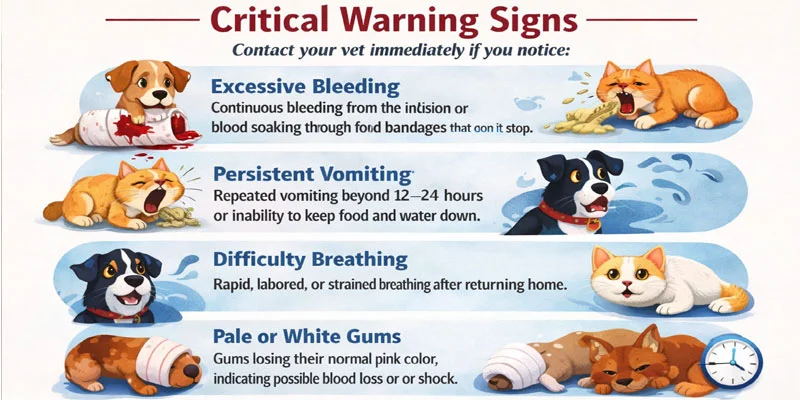
Contact your vet immediately if you notice:
- Excessive bleeding: Constant bleeding of the incision or wetness of bandages which do not cease.
- Continuous vomiting: It is characterized by repeated vomiting after 12-24 hours or failure to retain food and water.
- Difficulty breathing: Rapid strained laboured breathing on returning home.
- Pale or white gums: Gums that no longer have their normal pink color, which may show that they are bleeding or in shock.
- Severe swelling: Swelling great deal of pain or of a warm nature around the surgical location with or without discharge.
- Severe lethargy after 24 hours: Persistant weakness, or unresponsiveness, or failure to raise oneself after anesthesia must have subsided.
Tips for Faster Recovery
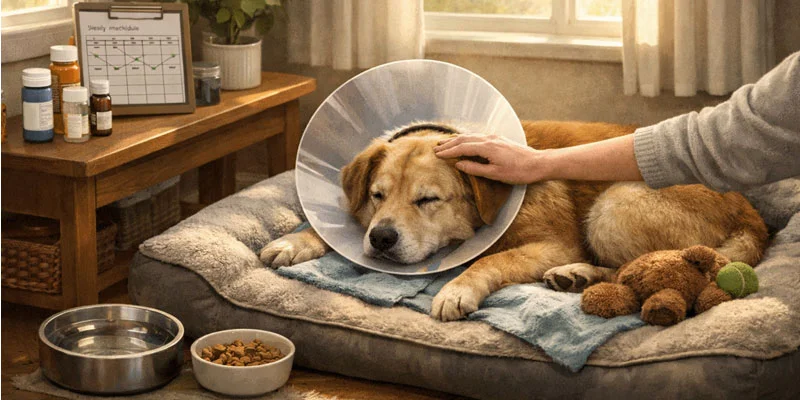
Help healing by:
- Keeping a quiet atmosphere.
- Adherence to schedules of medications.
- Preventing licking
- The provision of comfortable bedding.
- Observing bathroom and food habits.
Consistency is key.
Emotional Support During Recovery
Pets are likely to become confused or anxious. Provide:
- Gentle reassurance
- Calm tone
- Light petting (if allowed)
- Familiar surroundings
Do not overdo the visitors.
Understanding the Cost & Financial Preparation
The overall cost of a surgical operation is based on many medical and operational factors that dictate the ultimate cost. Knowing what drives the price will help you to plan better and eliminate financial strain in an otherwise stressful period of time.
What Affects the Cost?
- Procedure type: Routine Procedures like spaying or neutering are the ones that are less expensive compared to orthopedic, tumor removal surgery or internal procedures.
- Emergency vs scheduled surgery: Emergency surgeries are most commonly pricier because of immediate treatment, staffing after-hours, and immediate diagnostics.
- Pre-surgical diagnostics: Blood tests, X-rays, ultrasounds, ECG monitoring will add to the final price but result in a safer procedure.
- Monitoring and anaesthesia: More complicated monitoring devices and special control raise the level of safety and total costs.
- Hospital facilities and equipment: Clinics with surgical suites, oxygen assistance and quality imaging are more expensive because the quality of care they provide is more developed.
- Postoperative drug use: These are pain drugs, antibiotics, anti-inflammation drugs, and special diets at an additional fee.
- Hospital stay: Complications or subsequent care will take more time and this leads to higher expense.
- Follow-ups: Suture removal, rechecks and other treatments can be charged separately.
Ways to Financially Prepare
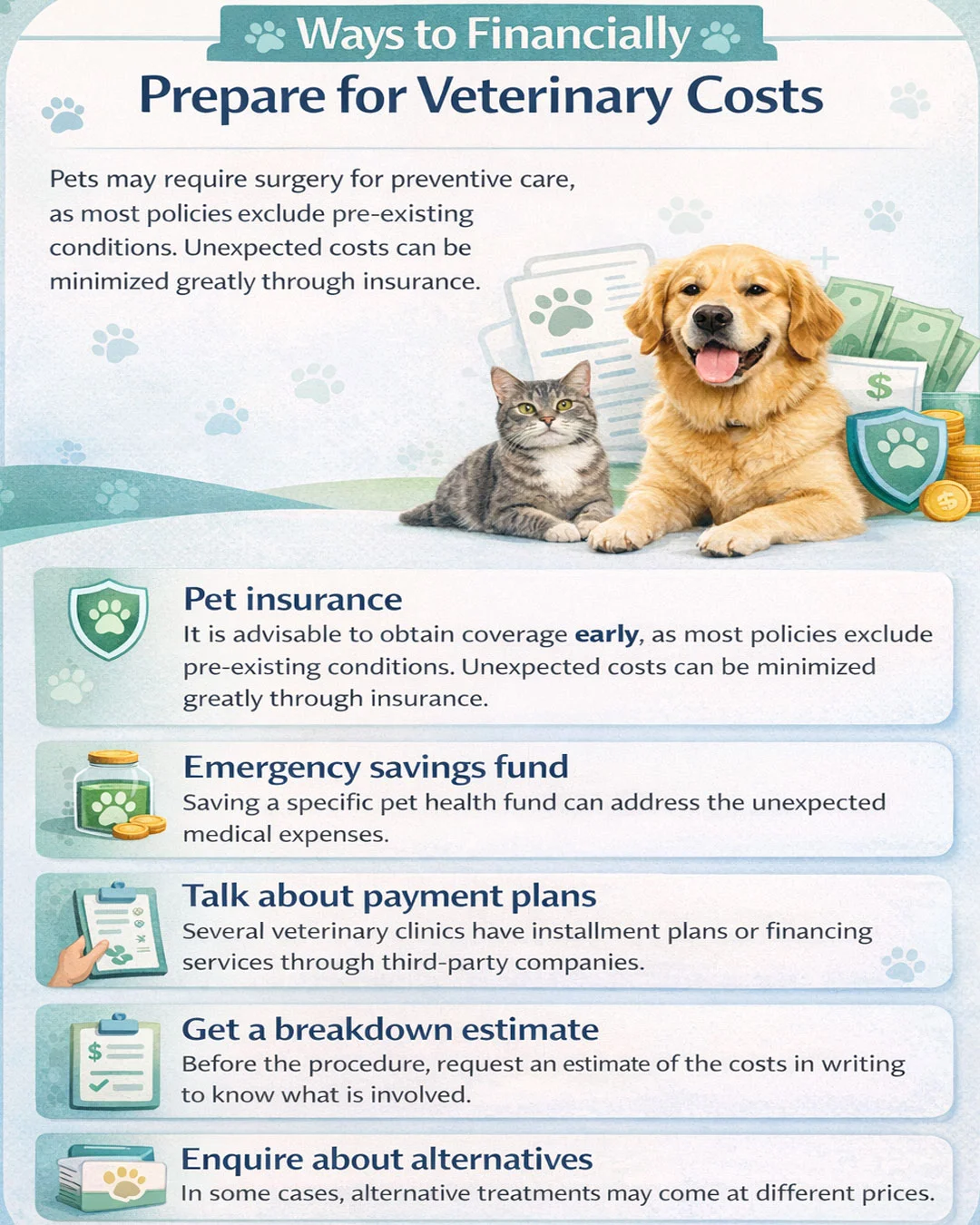
- Pet insurance: It is advisable to obtain coverage early, as most policies exclude pre-existing conditions. Unexpected costs can be minimized greatly through insurance.
- Emergency savings fund: Saving a specific pet health fund can address the unexpected medical expenses.
- Talk about payment plans: Several veterinary clinics have installment plans or financing services through third-party companies.
- Get a break down estimate: Before the procedure, request an estimate of the costs in writing to know what is involved.
- Enquire about alternatives: In some cases, alternative treatments may come at different prices.
You must use your financial resources to recover your pets adequately since you are not financially prepared. The veterinarian needs to have open communication with you, and this gives you transparent information to make accountable medical decisions.
Quick Comparison: Dogs vs Cats Recovery
Factor | Dogs | Cats |
Activity Control | Harder (more energetic) | Easier (self-resting) |
Appetite Return | Usually faster | May take longer |
Incision Interference | Moderate | Higher licking risk |
Stress Level | Moderate | Can be high |
FAQs
The majority of standard medical interventions take place in a time span of 10-14 days to cure. The recovery time of complex surgeries and orthopedic surgeries takes several weeks. The faster a routine the more it will be to take your pet home- better still, to follow the rehabilitation plans established as pet care guidelines to the most pleasant experience as he or she recuperates after surgery!
Several safety checks are mandatory in modern veterinary anesthesia and they offer high levels of protection to patients. To minimize risks, vets perform pre-surgery tests as they check the heart rate and oxygen concentration, and blood pressure during surgery.
Routine procedures may be reinstated after 10-14 days but only with the approval of the veterinary. Difficult operations demand more rest and slow re enterance into exercise.
Yes, they require the initial 24 hours under observation to observe 3 crucial factors that incorporate breathing and appetite and incision healing. Constant monitoring will allow the health personnel to detect issues in the recovery process as well as offering effective recovery support.
Final Thoughts
Surgical interventions may be daunting, however, with the right preparation, qualified veterinary treatment, and supportive care in the recovery stages, the results are usually highly encouraging. Knowing what should and should not happen before, during, and after surgery, you can take an active part in the healing process of your pet and guarantee its safety, comfort, and a comfortable recovery throughout the process. Visit VetCare Plus today.